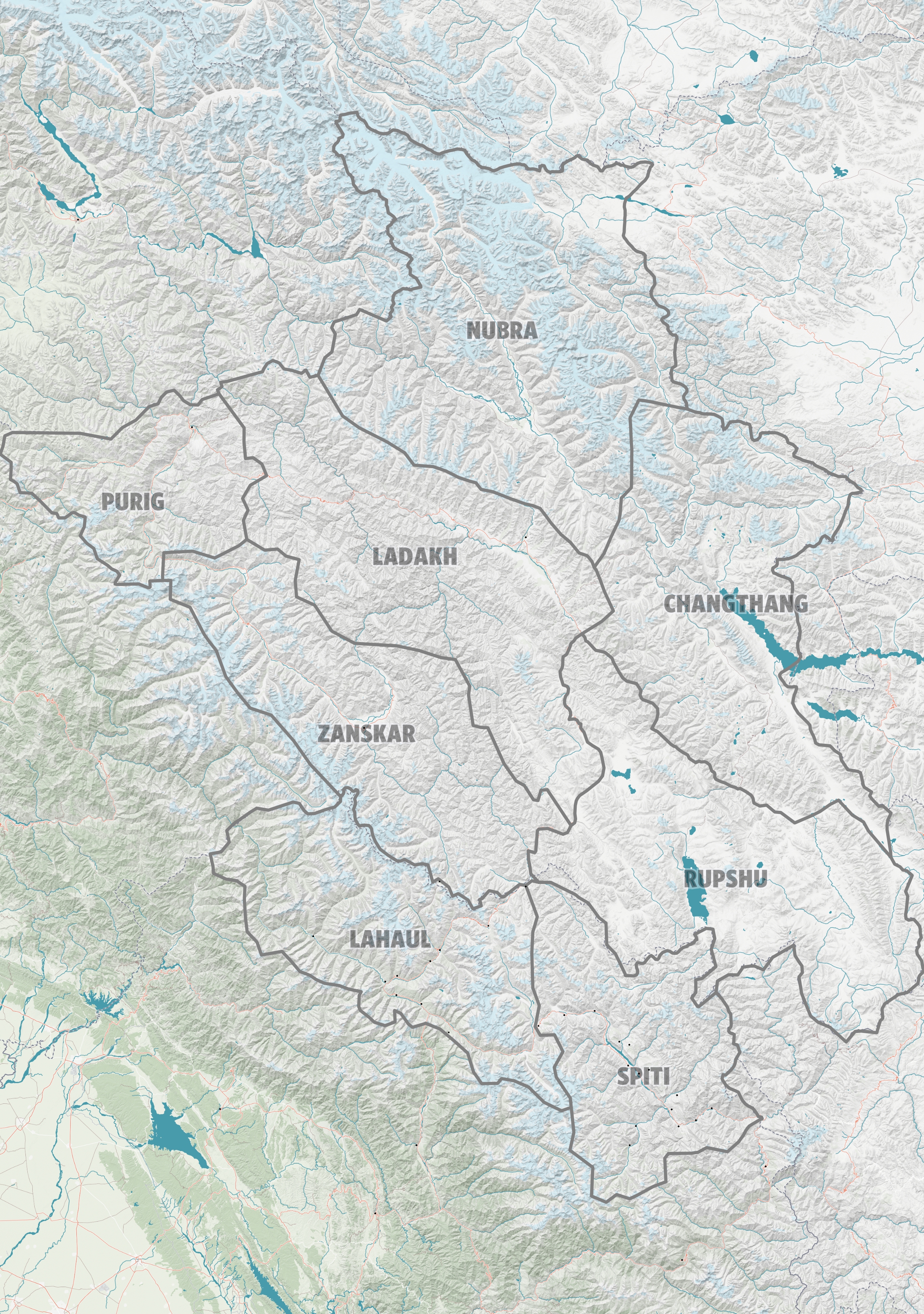
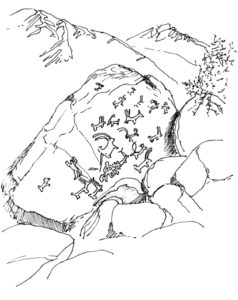
The year 2024 marks the end of fieldwork activities after twelve years. Laurianne Bruneau decided not to submit a new funding application, due to the unpredictable political and security conditions in the Kashmir region, despite the cooperation agreement signed between the EPHE and the CCAS of the University of Kashmir, which remains valid until 2027. The second part of the Himalayan Rock Art dataset, comprising around 11,000 images, has been published in Open Access on the Nakala repository. A first version of the HiRADa database (accessible internally only) has been finalised. It comprises 165 rock art sites across India, Pakistan and Afghanistan, over 17,500 motifs and nearly 1,500 scenes: it will be made available to all in 2026. In November 2024, a closing event was held in Paris, featuring a lecture on community archaeology in the Himalayas by Dr Abdul Hameed (researcher in residence at the Institut d’Études Avancées de Paris) and a photographic exhibition entitled ‘Speaking Stones – Rock Art of Ladakh” by Indian photographer Ahtushi Deshpande at the Edmond Rostand Media Library in Paris. An international symposium on Himalayan rock art also brought together around thirty researchers at the Condorcet Campus. The MAFHI intends to continue collaborating with its partners in others ways, notably through Summer and Winter schools and South-North exchange programmes.
 MAFHI Archaeological Reports Series n°2